UK vet prices are up 67% since 2019
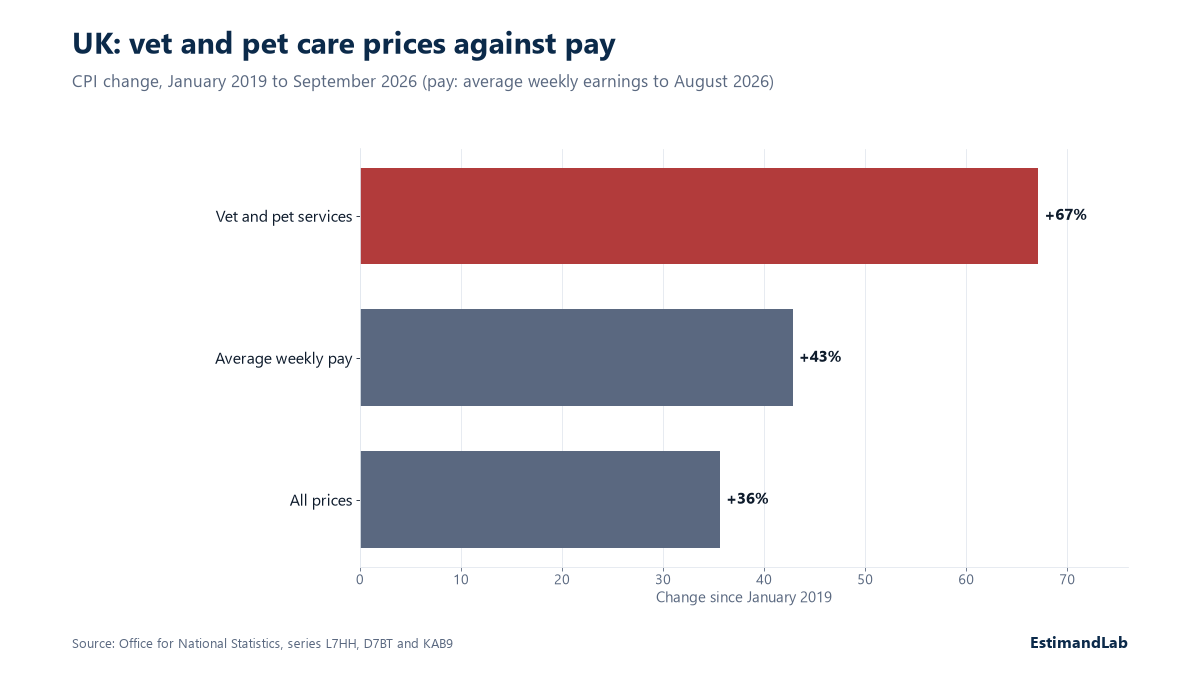
UK vet and pet care prices are up 67% since January 2019, nearly twice the 36% rise in all prices and above the 43% rise in pay. A new competition order will force vets to publish price lists.
UK vet and pet care prices are up 67% since January 2019. All prices are up 36% and weekly pay is up 43%, so vet prices have risen nearly twice as fast as prices overall and well ahead of pay.
A new competition order will make UK vet practices publish prices for common treatments. Owners will be able to compare before they book.
The numbers
Each series is the change from January 2019 to September 2026. Pay is average weekly earnings, seasonally adjusted, and runs to August 2026, the latest month published.
| Item | Change since January 2019 |
|---|---|
| Vet and other services for pets | +67.1% |
| Average weekly pay | +42.8% |
| All consumer prices | +35.6% |
Vet prices rose about 17% more than pay. The price index went from 110.0 to 183.8 on the ONS base of 2015 = 100.
The September 2026 prices and August 2026 pay are the newest the ONS has published. The next release is due in November.
What changed in the rules
The Competition and Markets Authority (CMA) investigated vet services for household pets from September 2023 to March 2026 and published the Veterinary Services Market Investigation Order 2026 in September 2026 [3]. Under it, practices must publish prices for 36 listed services on their website and at each premises, and publish prices for their most common flea, tick and worming products. Those duties apply from 22 March 2027. Written estimates and itemised bills follow from 22 September 2027. The cap on the fee for a written prescription is £21.40, plus up to £12.70 for each extra medicine, including VAT, until 31 March 2028.
Why prices rose
The ONS series records prices, not causes, so we make no claim about why vet prices rose as they did. What the order does show is that the regulator now requires published prices. Our reading is that this shifts the buyer’s position, because an owner who can see prices first can compare before treatment starts.
What it means
For a pet owner, do not wait for 2027. Ask your practice for a written estimate before any treatment that is not urgent, ask what a prescription costs, and compare with a second practice. The order also requires written prescriptions, which let you buy medicine elsewhere, and caps the fee for one from September 2027.
For a practice, publish clear prices now. The order requires it, and a practice that shows a fair price gains trust from owners who will check.
For a policymaker, the test is whether the price lists change what owners pay. That calls for a before-and-after comparison of prices with practices that comply early against those that comply late.
Limits
The ONS index covers veterinary and other services for pets, so it blends vet care with other pet services. It tracks the price of a fixed basket of services, not what a given owner spends. Pay and price series end in different months. The base year of 2015 only sets the scale. The change since January 2019 does not depend on it.
Sources
- Office for National Statistics, CPI index 09.3.5.0 veterinary and other services for pets (L7HH) and CPI all items (D7BT), https://www.ons.gov.uk/economy/inflationandpriceindices/timeseries/l7hh/mm23 (checked 2026-10-29; September 2026 is the latest month)
- Office for National Statistics, AWE whole economy total pay seasonally adjusted (KAB9), https://www.ons.gov.uk/employmentandlabourmarket/peopleinwork/earningsandworkinghours/timeseries/kab9/emp (checked 2026-10-29; August 2026 is the latest month)
- Gov.uk, Competition and Markets Authority, guidance for veterinary businesses with 14 or fewer practices on complying with the order, https://www.gov.uk/guidance/small-veterinary-businesses-complying-with-the-cmas-order (checked 2026-10-29)
We first posted this finding on X: https://x.com/EstimandLab/status/2115503327505240260